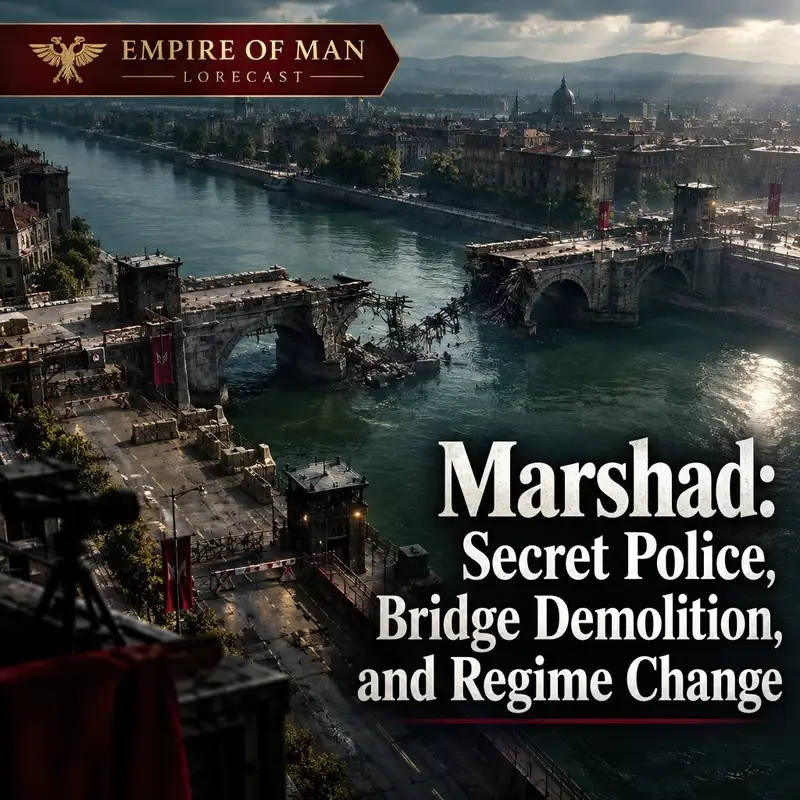
Marshad: Secret Police, Bridge Demolition, and Regime Change
Viewed as military history, Marshad belongs to Prince Roger’s march across Marduk and the later struggle to overturn the coup that framed him, a campaign shaped by logistics and alliances as much as firepower. The episode focuses on intelligence, internal security, covert networ…
Viewed as military history, Marshad belongs to Prince Roger’s march across Marduk and the later struggle to overturn the coup that framed him, a campaign shaped by logistics and alliances as much as firepower. The episode focuses on intelligence, internal security, covert networks, and the struggle for political legitimacy, showing why the subject matters beyond the immediate event. Control of information and institutions matters as much as battlefield power once the campaign becomes a contest over lawful rule. The supplied chronology sets the boundary, so the discussion stays with the named people, forces, places, and events. Its position matters because the wider campaign shows how survival depends on logistics, adaptation, coalition building, and the conversion of small-unit skill into strategic political effect. The result is a study of what a decision solves immediately, what it costs later, and how it changes the next strategic problem. Visit ImaginedBattlefield.com for more military and science fiction.